

Abstract: As manufacturers look for ways to reduce material costs, improve resource efficiency, and meet increasingly demanding sustainability expectations, Regenerated PS Plastic Material is becoming an increasingly practical alternative to conventional virgin polystyrene. JUWU develops regenerated PS materials through a multi-stage recycling and purification process designed to recover stable processing and mechanical properties from industrial and post-consumer polystyrene waste. With impurity control below 0.1%, stable processing characteristics, up to 95% retention of key mechanical properties, and reported carbon-emission reductions of up to 70% compared with virgin PS production, this material offers a balanced approach to performance, cost, and environmental responsibility.
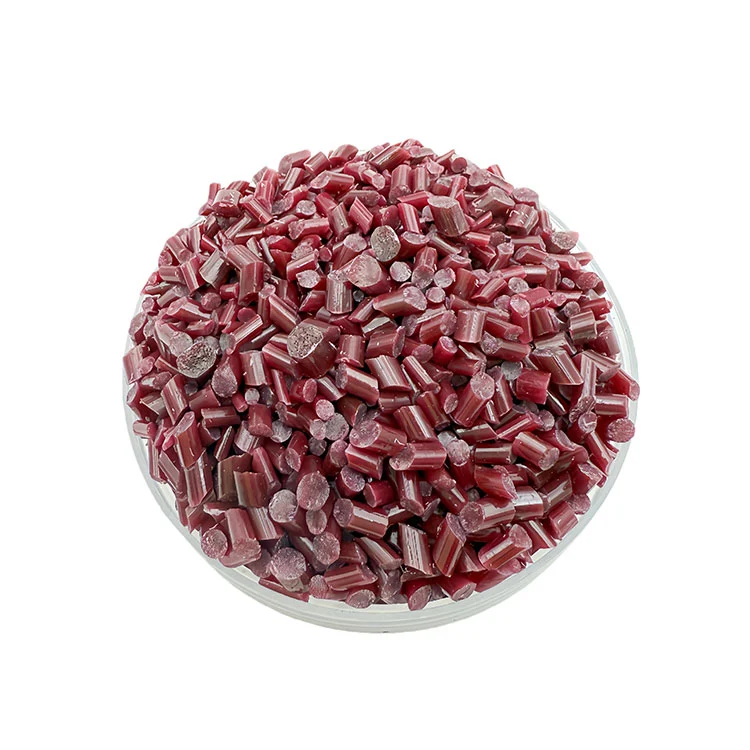
Table of Contents
- What Is Regenerated PS Plastic Material?
- Why Is Regenerated PS Important for Modern Manufacturing?
- What Are the Key Properties of Regenerated PS Plastic Material?
- How Is Regenerated PS Plastic Material Produced?
- How Does Regenerated PS Compare with Virgin PS?
- Where Can Regenerated PS Plastic Material Be Used?
- How Does JUWU Control Material Quality and Consistency?
- What Should Buyers Consider When Purchasing Regenerated PS?
- Frequently Asked Questions About Regenerated PS Plastic Material
- Conclusion
What Is Regenerated PS Plastic Material?
Regenerated PS Plastic Material is a recycled polystyrene material that has been processed beyond simple collection and re-melting. Instead of treating waste PS as a low-value secondary material, a controlled regeneration process uses sorting, cleaning, purification, impurity removal, stabilization, and pelletizing to restore useful material properties.
According to JUWU, its regenerated PS material is produced from selected industrial scraps and compliant post-consumer polystyrene waste. The material passes through multiple purification stages to progressively remove impurities and volatile substances before the final pellets are formed.
This distinction is important for manufacturers. A high-quality regenerated material needs to deliver more than recycled content. It must also provide predictable flow, dimensional stability, mechanical performance, and batch consistency so that it can be integrated into established production processes.
JUWU's regenerated PS material has a reported density of approximately 1.05 g/cm³, a melt flow rate of around 11 g/10 min, and an impact strength of approximately 2–3 kJ/m². These characteristics make it suitable for a broad range of industrial manufacturing requirements.
Why Is Regenerated PS Important for Modern Manufacturing?
Manufacturers today are balancing several challenges at the same time. Raw-material prices can influence production costs, sustainability requirements are becoming more important, and customers increasingly expect suppliers to demonstrate responsible material sourcing.
Regenerated PS can address these challenges by giving previously used polystyrene a second productive life while maintaining a performance profile suitable for demanding applications.
- Resource efficiency: Existing polystyrene waste can become a useful secondary raw material.
- Cost efficiency: Regenerated materials can reduce dependence on virgin polymer feedstock.
- Environmental value: Recycling helps divert suitable plastic waste from disposal.
- Production compatibility: Controlled regeneration can provide stable processing characteristics.
- Material consistency: Purification and laboratory testing help reduce batch-to-batch variation.
- Product sustainability: Recycled content can support manufacturers pursuing more resource-efficient product strategies.
JUWU reports that its regenerated PS material can reduce carbon emissions by up to 70% compared with virgin-material production and can provide raw-material cost savings of approximately 30%–40%, depending on application and purchasing conditions.
What Are the Key Properties of Regenerated PS Plastic Material?
The value of regenerated PS depends heavily on how well the recycling process controls contamination, degradation, moisture, volatile substances, and polymer-chain stability. JUWU's product specification emphasizes these factors through multi-stage purification and quality testing.
| Property | Reported Performance | Manufacturing Benefit |
|---|---|---|
| Density | Approx. 1.05 g/cm³ | Supports stable material processing and predictable part weight |
| Melt Flow Rate | Approx. 11 g/10 min | Provides suitable flow characteristics for molding applications |
| Impact Strength | Approx. 2–3 kJ/m² | Supports applications requiring mechanical integrity |
| Impurity Content | Below 0.1% | Helps improve processing stability and product consistency |
| Shrinkage Rate | Approx. 0.4%–0.6% | Helps reduce dimensional deformation during molding |
| Original Mechanical Property Retention | 95% or more for key impact and tensile properties | Supports replacement of virgin PS in many industrial applications |
| Heavy Metals | Zero detection reported for specified restricted metals | Supports environmental and compliance requirements |
| Bromine Content | Controlled at approximately 50–120 ppm | Provides additional material-control information for buyers |
For precision molding, dimensional stability can be particularly important. JUWU states that its regenerated PS maintains a shrinkage range of approximately 0.4%–0.6%, helping manufacturers reduce deformation and improve finished-product qualification rates.
How Is Regenerated PS Plastic Material Produced?
The quality of regenerated PS begins with the recycling process. Simply melting collected plastic is not enough to produce a material suitable for demanding industrial applications. Contaminants, mixed polymers, moisture, volatile substances, and degraded material can all affect processing performance.
JUWU uses an eight-stage recycling and purification process designed to progressively improve material purity and stability.
- Raw-material selection: Suitable industrial scraps and post-consumer PS waste are selected.
- Sorting: Different material types and unwanted contaminants are separated.
- Deep cleaning: Surface contaminants and residues are removed.
- Decontamination: Additional treatment helps reduce undesirable substances.
- Evaporation and impurity removal: Volatile substances and residual contaminants are further controlled.
- Filtration: Multi-layer filtration removes fine impurities from the material stream.
- Polymer stabilization: Processing is used to maintain a more stable polymer structure.
- Pelletizing and testing: The regenerated material is converted into pellets and tested before shipment.
This controlled approach is one of the main differences between engineered regenerated PS and basic recycled plastic. The objective is not simply to recycle waste, but to create a usable raw material with predictable characteristics.
How Does Regenerated PS Compare with Virgin PS?
Virgin PS remains an important engineering and manufacturing material, but regenerated PS can provide an attractive alternative where sustainability, cost control, and performance need to be balanced.
| Factor | Virgin PS | Regenerated PS |
|---|---|---|
| Raw Material Source | New polymer feedstock | Selected industrial and post-consumer PS waste |
| Resource Efficiency | Requires new raw resources | Reuses existing polymer resources |
| Material Cost Potential | Generally higher | Potentially 30%–40% lower according to JUWU |
| Environmental Position | Higher reliance on virgin feedstock | Supports recycled-material strategies |
| Processing Performance | Highly predictable | Can approach virgin-material performance when properly regenerated |
| Mechanical Property Retention | Baseline reference | Up to 95% or more for key properties reported by JUWU |
For manufacturers, the most important question is not whether regenerated PS is identical to every virgin PS grade. Instead, buyers should determine whether its actual performance matches the technical requirements of their specific product and production process.
Where Can Regenerated PS Plastic Material Be Used?
Because of its combination of rigidity, dimensional stability, processing performance, and controlled purity, regenerated PS can serve a variety of industrial applications.
Electronics Components
Regenerated PS can be used for selected internal electronic components and non-visual housings where stable dimensions and consistent processing are important. JUWU reports applications among Korean electronic manufacturers.
Office Equipment
Printer components, equipment bases, and selected office-equipment parts can benefit from a material that combines rigidity with predictable molding performance.
Automotive and Appliance Components
Regenerated PS can also be considered for selected automotive interior parts and household appliance components when the material specification matches the application requirements.
Decorative and Technical Products
Its hardness and rigidity make regenerated PS suitable for decorative components as well as technical products requiring structural integrity.
- Electronic component housings
- Printer and office-equipment components
- Equipment bases
- Selected automotive interior parts
- Household appliance components
- Decorative plastic components
- Precision injection-molded parts
Application suitability should always be verified through technical data, sample testing, and production trials, particularly when the end product has strict regulatory, safety, food-contact, or medical requirements.
How Does JUWU Control Material Quality and Consistency?
Quality consistency is one of the biggest concerns when purchasing recycled plastic. A reliable regenerated material supplier therefore needs more than recycling equipment; it also needs systematic inspection and traceability.
JUWU states that its production facility uses multiple filtration systems with filtration accuracy of up to 150 mesh. Vacuum degassing equipment is used to control volatile substances, with the reported volatile content maintained below 300 ppm.
The company also operates a laboratory for routine material analysis. Infrared spectroscopy is used to identify and verify material characteristics, while rheological testing evaluates flow behavior. These tests help confirm that different production batches remain within the required performance range.
For international buyers, this type of quality-control system can be especially valuable because material consistency directly affects injection-molding parameters, finished-product dimensions, rejection rates, and production efficiency.
What Should Buyers Consider When Purchasing Regenerated PS?
Choosing a regenerated PS supplier should involve more than comparing the quoted price per kilogram. A lower purchase price may not produce lower total manufacturing costs if the material creates excessive processing adjustments or rejected parts.
Before placing a bulk order, buyers should evaluate:
- Material grade: Confirm that the grade matches the intended molding process.
- Melt flow: Verify that the flow characteristics fit the production equipment and product geometry.
- Mechanical properties: Check impact strength, tensile performance, rigidity, and hardness.
- Dimensional stability: Confirm shrinkage behavior for precision components.
- Impurity control: Ask for relevant inspection data and quality documentation.
- Batch consistency: Determine how the supplier monitors color, flow, density, and mechanical properties.
- Compliance: Review certification requirements for the destination market and application.
- Packaging: Ensure that packaging protects the pellets from moisture and contamination.
- Technical support: Check whether the supplier can provide drying and molding guidance.
- Supply capacity: Evaluate whether the manufacturer can support long-term production volumes.
For example, JUWU packages its regenerated PS material in 25 kg vacuum-sealed bags with a moisture-resistant barrier layer. The company also provides processing guidance, including a recommended drying temperature of approximately 75–80°C for 3–4 hours before processing.
Frequently Asked Questions About Regenerated PS Plastic Material
Can Regenerated PS Plastic Material replace virgin PS?
In many industrial applications, regenerated PS can serve as an alternative to virgin PS when its technical specifications meet the product requirements. JUWU reports that its material can directly replace virgin PS in more than 90% of industrial applications. However, specialized applications such as medical or food-contact products should undergo appropriate sample testing and regulatory evaluation before adoption.
What is the impurity level of JUWU Regenerated PS Plastic Material?
JUWU reports that its eight-stage recycling process can control impurity content to below 0.1%. Additional filtration and purification are used to improve processing stability and material consistency.
How much can regenerated PS reduce material costs?
According to JUWU's product information, its regenerated PS can reduce raw-material costs by approximately 30%–40% compared with virgin PS, depending on purchasing conditions, specifications, and application requirements.
What is the minimum order quantity for customized performance?
For customized requirements such as enhanced UV resistance or adjusted flame-retardant levels, JUWU states that the minimum order quantity is 20 tons. Formula optimization can then be performed according to the customer's application requirements.
How should regenerated PS pellets be stored and prepared before molding?
The material should be protected from moisture and contamination during storage. JUWU uses vacuum-sealed moisture-resistant packaging and recommends drying the material at approximately 75–80°C for 3–4 hours before processing, followed by adjustment of injection-molding parameters according to the actual production system.
Conclusion
Regenerated PS Plastic Material represents a practical evolution of plastic recycling: instead of focusing only on waste reduction, advanced regeneration aims to recover useful material performance and return it to industrial production. With controlled impurity levels, stable processing characteristics, dimensional stability, retained mechanical performance, and potential cost and carbon-emission advantages, regenerated PS can help manufacturers develop more resource-efficient production strategies.
For companies searching for a reliable Regenerated PS Plastic Material supplier, manufacturer, or factory in China, material consistency, technical support, testing capability, customization options, and long-term supply stability should all be evaluated alongside price. JUWU combines more than 20 years of recycled-plastic processing experience with dedicated purification, testing, packaging, and technical-support capabilities to serve industrial buyers worldwide.
Ready to evaluate regenerated PS for your next production project? Contact JUWU to discuss your required grade, application, performance specifications, customization needs, packaging requirements, and purchasing volume. Explore the Regenerated PS Plastic Material solution and contact us for technical consultation and a customized quotation.