

How Do Recycled Resin Materials Cut Production Costs?
For manufacturers of plastic products, the cost of raw materials is often the single largest variable in the production equation. Virgin resin prices are subject to the volatility of oil and gas markets, and they have been on an upward trend for much of the past decade. In this environment, procurement managers are under constant pressure to find ways to reduce costs without sacrificing quality. Recycled resin materials have emerged as a compelling solution. They offer a lower and more stable price point than virgin resins, and in many applications, they deliver performance that is virtually indistinguishable from virgin material. For a manufacturer of packaging, automotive components, or consumer goods, switching to recycled resin can cut raw material costs by 20-40%.
This guide is written for procurement managers who need to understand how recycled resin materials cut production costs and how to source them effectively. We will cover the types of recycled resins available, the cost drivers that determine their price, the performance characteristics that affect their suitability for different applications, and the criteria for evaluating a supplier. We will also provide detailed product parameters from our factory at Ningbo JUWU International Trading Co., Ltd. Whether you are exploring recycled resin for the first time or looking to optimize an existing supply chain, this guide will help you make informed purchasing decisions.
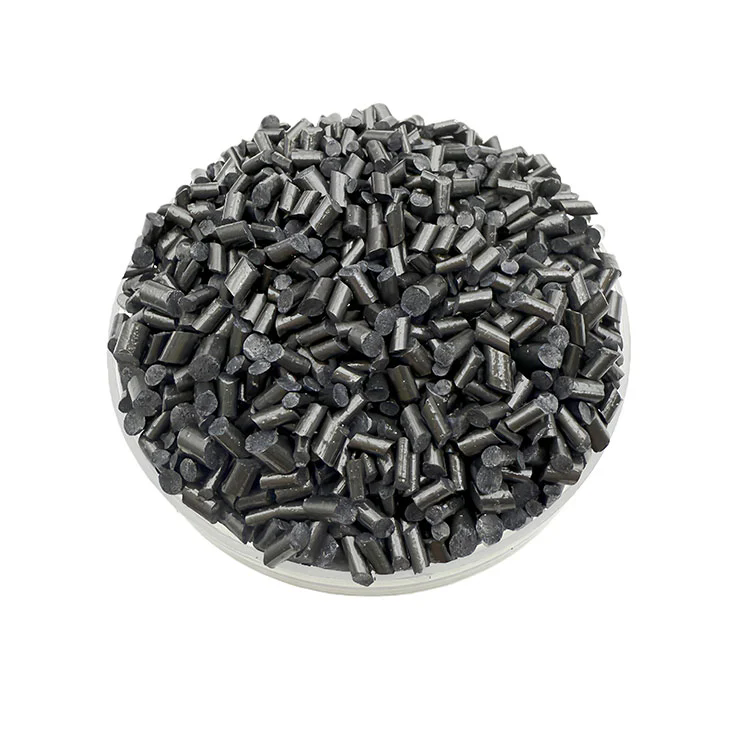
Table of Contents
- 1. What Are Recycled Resin Materials and Where Do They Come From?
- 2. How Do Recycled Resin Prices Compare to Virgin Resin?
- 3. What Are the Key Cost Drivers for Recycled Resin Materials?
- 4. What Performance Characteristics Should Buyers Evaluate?
- 5. How Do You Evaluate a Recycled Resin Supplier?
- 6. What Are the Key Product Parameters from Our Factory?
- 7. Frequently Asked Questions (FAQ)
- 8. Conclusion
1. What Are Recycled Resin Materials and Where Do They Come From?
Recycled resin materials are polymers that have been recovered from post-industrial or post-consumer waste streams and reprocessed into pellets or flakes that can be used as feedstock for new products. Post-industrial recycled resin, also known as pre-consumer recycled resin, comes from manufacturing scrap, such as sprues, runners, and off-spec parts. This material is typically clean, well-identified, and consistent in quality, making it the preferred feedstock for high-value applications. Post-consumer recycled resin comes from products that have been used and discarded by consumers, such as bottles, containers, and bags. This material requires more extensive processing to clean and sort, which adds to the cost but also reduces the environmental impact. The table below compares the two types of recycled resin.
| Type | Source | Purity | Cost | Typical Applications |
| Post-Industrial Recycled (PIR) | Manufacturing scrap | High | Lower | Automotive parts, industrial components |
| Post-Consumer Recycled (PCR) | Consumer waste | Moderate | Higher | Packaging, consumer goods, bottles |
| Ocean-Bound Recycled | Coastal collection | Moderate | Highest | Premium sustainable products |
At Ningbo JUWU International Trading Co., Ltd., we supply recycled resin materials from a network of qualified recyclers and processors. We work with both post-industrial and post-consumer sources to provide our customers with the grade that best meets their performance and cost requirements. Our engineering team can assist with material selection and provide technical data for each grade.
2. How Do Recycled Resin Prices Compare to Virgin Resin?
The primary reason manufacturers consider recycled resin is price. Recycled resin is typically priced 20-40% below the price of virgin resin of the same polymer type. This price advantage is driven by the lower cost of the feedstock—waste plastic is cheaper than virgin polymer pellets—and by the fact that recycled resin production requires less energy than virgin resin production. However, the price advantage varies by polymer type, by the quality of the recycled resin, and by market conditions. For example, recycled PET (rPET) often sells at a premium to virgin PET because of strong demand from beverage companies. Recycled HDPE and PP typically sell at a discount to their virgin counterparts. The table below compares the typical price ranges for virgin and recycled resins.
| Polymer | Virgin Price (USD/ton) | Recycled Price (USD/ton) | Typical Discount |
| PET | 1,100 - 1,300 | 900 - 1,200 | 0 - 20% |
| HDPE | 1,000 - 1,200 | 700 - 950 | 20 - 35% |
| PP | 1,100 - 1,300 | 750 - 1,000 | 25 - 40% |
| PS | 1,200 - 1,400 | 850 - 1,100 | 20 - 35% |
| ABS | 1,500 - 1,800 | 1,100 - 1,400 | 20 - 35% |
At JUWU, our factory sources recycled resin from qualified suppliers and offers competitive pricing based on volume and grade. We provide transparent pricing and can help our customers evaluate the total cost savings from switching to recycled resin.
3. What Are the Key Cost Drivers for Recycled Resin Materials?
The price of recycled resin is determined by several cost drivers. Understanding these drivers helps buyers negotiate better prices and anticipate market trends. The most important drivers are the cost of the feedstock, the cost of processing, the quality grade, the polymer type, and the market demand. The cost of the feedstock is the largest component. It depends on the availability of waste plastic and the cost of collection and sorting. The cost of processing includes cleaning, grinding, washing, and pelletizing. Higher-quality recycled resin requires more processing, which increases the cost. The polymer type also matters: some polymers are easier to recycle than others. And market demand affects the price: when demand for recycled resin is high, the price rises. The table below summarizes these cost drivers.
| Cost Driver | Description | Impact on Price |
| Feedstock Cost | Cost of waste plastic collection and sorting | High (largest component) |
| Processing Cost | Cleaning, grinding, washing, pelletizing | Moderate to high |
| Quality Grade | Purity, consistency, and properties | High (higher grade = higher price) |
| Polymer Type | Ease of recycling and market demand | Variable |
| Market Demand | Demand from brands and regulators | Increasing |
At our factory, we work closely with our suppliers to manage these cost drivers and to offer our customers the best possible pricing. We also provide market intelligence and forecasting to help our customers plan their purchases. Our goal is to be a reliable and cost-effective partner for recycled resin materials.
4. What Performance Characteristics Should Buyers Evaluate?
When evaluating recycled resin for a specific application, buyers must consider the performance characteristics that affect the manufacturing process and the final product. The most important characteristics are the melt flow index (MFI), the density, the tensile strength, the impact strength, and the color. The MFI determines the flow properties of the resin and its suitability for different processing methods. The density affects the weight and stiffness of the final part. The tensile strength determines the load-bearing capacity. The impact strength determines the resistance to cracking. The color affects the appearance of the final product. The table below summarizes these characteristics and their typical values for recycled resins.
| Characteristic | Test Method | Typical Range for Recycled Resin | Importance |
| Melt Flow Index (MFI) | ASTM D1238 | 0.5 - 50 g/10 min | Determines processability |
| Density | ASTM D792 | 0.90 - 1.40 g/cm³ | Affects weight and stiffness |
| Tensile Strength | ASTM D638 | 15 - 40 MPa | Determines load capacity |
| Impact Strength | ASTM D256 | 50 - 500 J/m | Determines crack resistance |
| Color | Visual | Natural, black, custom | Affects appearance |
At Ningbo JUWU International Trading Co., Ltd., our factory provides detailed technical data sheets for every grade of recycled resin we supply. We also offer testing services to verify the performance characteristics of the material. Our engineering team can assist with material selection and provide guidance on processing parameters.
5. How Do You Evaluate a Recycled Resin Supplier?
Evaluating a supplier of recycled resin is critical for ensuring a reliable supply of high-quality material. The key criteria for evaluating a supplier are material sourcing, quality consistency, technical support, delivery performance, and cost. Material sourcing includes the ability to source consistent, high-quality feedstock. Quality consistency includes the systems and processes that ensure batch-to-batch uniformity. Technical support includes the ability to assist with material selection and processing. Delivery performance includes the ability to meet lead times and respond to urgent orders. Cost includes the total cost of ownership, not just the unit price. The table below summarizes these criteria and what to look for in each.
| Evaluation Criterion | What to Look For | Why It Matters |
| Material Sourcing | Reliable feedstock suppliers, traceability | Ensures consistent quality and supply |
| Quality Consistency | ISO 9001 certification, batch testing | Ensures uniform processing and product quality |
| Technical Support | Engineering team, processing guidance | Helps optimize the use of recycled resin |
| Delivery Performance | On-time delivery record, inventory capability | Keeps your production line running |
| Cost | Total cost of ownership, not just unit price | Ensures long-term value |
At our factory, we have been supplying recycled resin materials for over a decade. We have a strong track record of quality, delivery, and customer satisfaction. We are ISO 9001 certified, and we maintain detailed records of all inspections. Our technical team is available to assist with material selection and processing. And we have a strong track record of on-time delivery to customers around the world. We invite you to evaluate us against these criteria and to consider us as your partner for recycled resin materials.
6. What Are the Key Product Parameters from Our Factory?
The following table provides the key product parameters for our recycled resin materials. These materials are available in a range of polymer types and grades to suit different applications. Our factory can also produce custom compounds to meet specific requirements.
| Parameter | Specification Range | Notes |
| Polymer Type | PET, HDPE, PP, PS, ABS, PC | Custom compounds available |
| Recycled Content | 30% - 100% | Blends with virgin resin available |
| Form | Pellets, Flakes | Pellets for injection molding, flakes for extrusion |
| Melt Flow Index | 0.5 - 50 g/10 min | Selected based on processing method |
| Density | 0.90 - 1.40 g/cm³ | Depends on polymer type and filler |
| Color | Natural, Black, Custom | Color matching available |
| Packaging | 25 kg bags, 1,000 kg jumbo bags | Custom packaging available |
| MOQ | 5 tons | Negotiable for large orders |
| Lead Time | 2 - 4 weeks | Depends on quantity and grade |
At our factory, we supply recycled resin materials to meet these specifications and more. We can customize the polymer type, recycled content, and color to suit your specific requirements. Our quality control system includes inspection of incoming feedstock, in-process testing, and final inspection before shipment. Our goal is to provide our customers with high-quality recycled resin materials that reduce their production costs and improve their sustainability profile.
7. Frequently Asked Questions (FAQ)
Question 1: Is recycled resin as strong as virgin resin?
Answer: In many applications, recycled resin can achieve performance that is comparable to virgin resin. However, the mechanical properties of recycled resin can be slightly lower than those of virgin resin due to the degradation that occurs during the recycling process. For critical applications, recycled resin may need to be blended with virgin resin or reinforced with additives to achieve the required performance. Our engineering team can help you evaluate the suitability of recycled resin for your specific application.
Question 2: What is the price difference between recycled and virgin resin?
Answer: The price difference depends on the polymer type and market conditions. In general, recycled resin is priced 20-40% below virgin resin. However, for some polymers, such as PET, the price difference can be smaller, and in some cases, recycled PET can sell at a premium. Our factory can provide current pricing for the specific polymer you are interested in.
Question 3: Can recycled resin be used for food contact applications?
Answer: Yes, recycled resin can be used for food contact applications, but it must meet strict regulatory requirements. In the United States, the FDA has issued guidance on the use of recycled plastics in food contact applications. In Europe, the European Food Safety Authority (EFSA) has similar requirements. The recycled resin must be produced using a process that ensures the removal of contaminants. Our factory can supply food-grade recycled resin that meets these requirements.
Question 4: How do I know if recycled resin is right for my application?
Answer: To determine if recycled resin is right for your application, consider the performance requirements, the processing method, and the cost targets. Recycled resin is suitable for many applications, including packaging, automotive components, and consumer goods. It may not be suitable for applications that require very high strength or optical clarity. Our engineering team can help you evaluate the suitability of recycled resin for your specific application.
Question 5: What is the lead time for ordering recycled resin?
Answer: The lead time for recycled resin depends on the polymer type, the grade, and the quantity ordered. For standard grades, the lead time is typically 2-4 weeks. For custom compounds, the lead time may be longer. At Ningbo JUWU International Trading Co., Ltd., we work closely with our customers to meet their delivery requirements.
8. Conclusion
Recycled resin materials offer a compelling opportunity for manufacturers to cut production costs while maintaining product quality and improving sustainability. By understanding the types of recycled resin available, the cost drivers that determine their price, the performance characteristics that affect their suitability, and the criteria for evaluating a supplier, procurement managers can make informed decisions that benefit their bottom line and the environment. At Ningbo JUWU International Trading Co., Ltd., our factory has the expertise and the supply chain to provide high-quality recycled resin materials at competitive prices. We work with our customers to understand their requirements and to provide the optimal material for their application.
Whether you are exploring recycled resin for the first time or looking to optimize an existing supply chain, we invite you to contact us to discuss your requirements. We can provide samples, technical data, and customized solutions. Our commitment to quality and customer satisfaction has made us a trusted partner for manufacturers around the world.
Contact Ningbo JUWU International Trading Co., Ltd. today to discuss your recycled resin requirements and discover how our materials can reduce your production costs.
Previous:No News